AI Automation Agency vs Building In-House: What UK Businesses Need to Know in 2026
The Question Every UK Business Reaches
Once a UK business decides AI automation is worth investing in, the next question is almost always: should we hire an agency, or build the capability in-house? It's a significant decision with long-term implications for cost, control, speed, and what you can actually deliver — and the honest answer depends on factors that most "agency vs in-house" guides don't address directly.
This guide gives you the framework to make the right decision for your specific situation, drawing on what we've seen work and fail across hundreds of UK automation engagements.
The Case for an AI Automation Agency
Speed to Value
An experienced AI automation agency can go from initial discovery call to a working production system in four to eight weeks. Building that same capability in-house — recruiting, onboarding, upskilling, and ramping a team to the point where they're delivering at that level — typically takes six to eighteen months. If you have a time-sensitive operational problem, the agency route is the only realistic option.
Breadth of Production Experience
A specialist automation agency has built dozens or hundreds of systems across multiple sectors. They have encountered the edge cases, API failures, rate limiting issues, and unexpected business logic complications that you will inevitably hit. That accumulated experience is genuinely valuable — it means problems are solved in hours rather than days, and your system is more robust from day one because it's designed by people who know what breaks.
In-house teams building their first AI automation systems are learning as they go. That's fine for non-critical projects, but risky for business-critical ones.
No Recruitment Risk
AI and automation engineering talent in the UK is in high demand and expensive. Senior engineers with production AI experience command salaries well above £80,000 in London and the South East. Junior engineers need significant ramp time. Hiring decisions are consequential and slow — a bad hire can set an in-house programme back by a year. An agency eliminates this risk entirely by giving you senior expertise on demand.
Lower Total Cost for Defined Projects
For a specific, defined automation project, an agency engagement typically costs £5,000-£25,000 depending on scope. Achieving the equivalent output from an in-house team requires the salary overhead of one or more senior engineers for months. For a project that needs to be built once and then maintained, the agency route is almost always more cost-effective when you factor in total employment cost.
The Case for Building In-House
Volume and Continuity
If you need to build automations continuously — dozens of systems per year, constantly evolving, deeply integrated with internal systems — an in-house team eventually makes economic sense. The crossover point is usually when you'd otherwise be sustaining a large ongoing agency retainer to support continuous development.
Proprietary Domain Knowledge
Some industries have highly specialised workflows where deep domain knowledge is genuinely difficult to transfer to an external agency. If your automation needs to encode complex internal business logic that changes frequently and is deeply embedded in institutional knowledge, an in-house team that lives that business logic every day can sometimes execute faster than an agency that needs to re-onboard for every change.
Internal AI Literacy as a Strategic Asset
For some organisations, building internal AI capability is a strategic goal in its own right — not just for cost savings, but because AI engineering skills are seen as a core competitive advantage. If this describes your business, investing in in-house capability makes sense even if it's more expensive short-term.
The Hybrid Model: What Most UK Businesses Actually Do
In practice, the most successful UK businesses don't choose one or the other — they use agencies for the initial build and complex new projects, and develop light in-house capability to handle ongoing modifications and maintenance.
The typical pattern looks like this: an agency builds the core infrastructure (the integrations, the AI logic, the error handling, the monitoring), documents it thoroughly, and hands it over to an internal operations person who can manage day-to-day configuration changes. The agency stays on a light retainer for new projects and complex changes. The internal person handles everything else.
This gives you the speed and expertise of an agency for the hard parts, while keeping ongoing costs under control and building internal familiarity with the systems.
Red Flags When Evaluating an Agency (or an In-House Hire)
Whether you're hiring an agency or an in-house team member, the warning signs are similar:
- Overpromising on timelines. Complex AI automation systems take time to build properly. Anyone promising a full multi-system deployment in two weeks is either underestimating the scope or planning to cut corners on testing and error handling.
- Vague architecture answers. "We'll use AI to automate it" is not an architecture. Press for specifics: which LLM, how are prompts validated, how are errors handled, what happens when the AI produces an incorrect output?
- No mention of documentation. Systems that aren't documented are systems that can't be maintained or handed over. This is where many cheap builds fall apart.
- No post-launch support plan. Production systems need ongoing attention. An agency that disappears after go-live leaves you with a system you can't support internally.
Questions to Ask Before You Decide
Before committing to either path, work through these questions:
- How urgently do you need the automation? If it's needed in the next three months, in-house is almost certainly too slow.
- Is this a one-time project or ongoing continuous development? One-time projects favour agencies; continuous development may eventually justify in-house.
- Do you have existing technical team members who could be upskilled, or would this require net-new hiring? Upskilling an existing engineer is faster and cheaper than hiring net-new.
- What's your budget? At budgets below £50,000 per year, agency engagements are almost always more cost-effective than employing a specialist.
- How critical is this system to your operations? Business-critical systems benefit from the reliability and experience of a specialist agency. Internal productivity tools can tolerate more learning curve.
Our Recommendation
For the majority of UK businesses approaching AI automation in 2026, the right starting point is a specialist agency engagement. Get something built quickly, by people who know what they're doing, with proper error handling and documentation. Learn from that experience. Then make a more informed decision about in-house investment based on actual usage patterns and the volume of automation work you genuinely need.
We are a UK-based AI automation agency that has run this process with businesses from early-stage to enterprise scale. If you'd like an honest conversation about which path makes sense for your specific situation — including cases where we'd recommend you build in-house — book a free consultation. We'd rather give you the right advice than win business that isn't right for you.
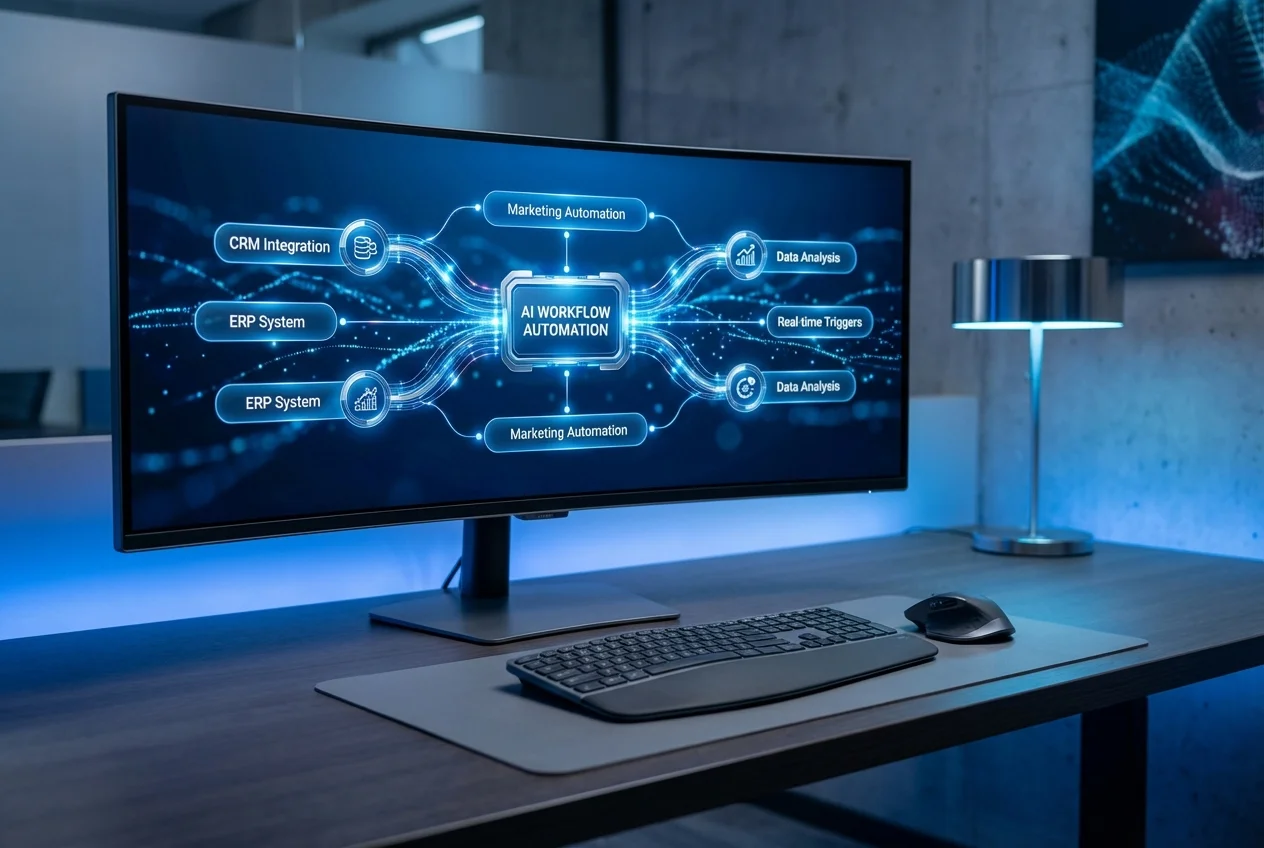 Agentic Workflow Automation
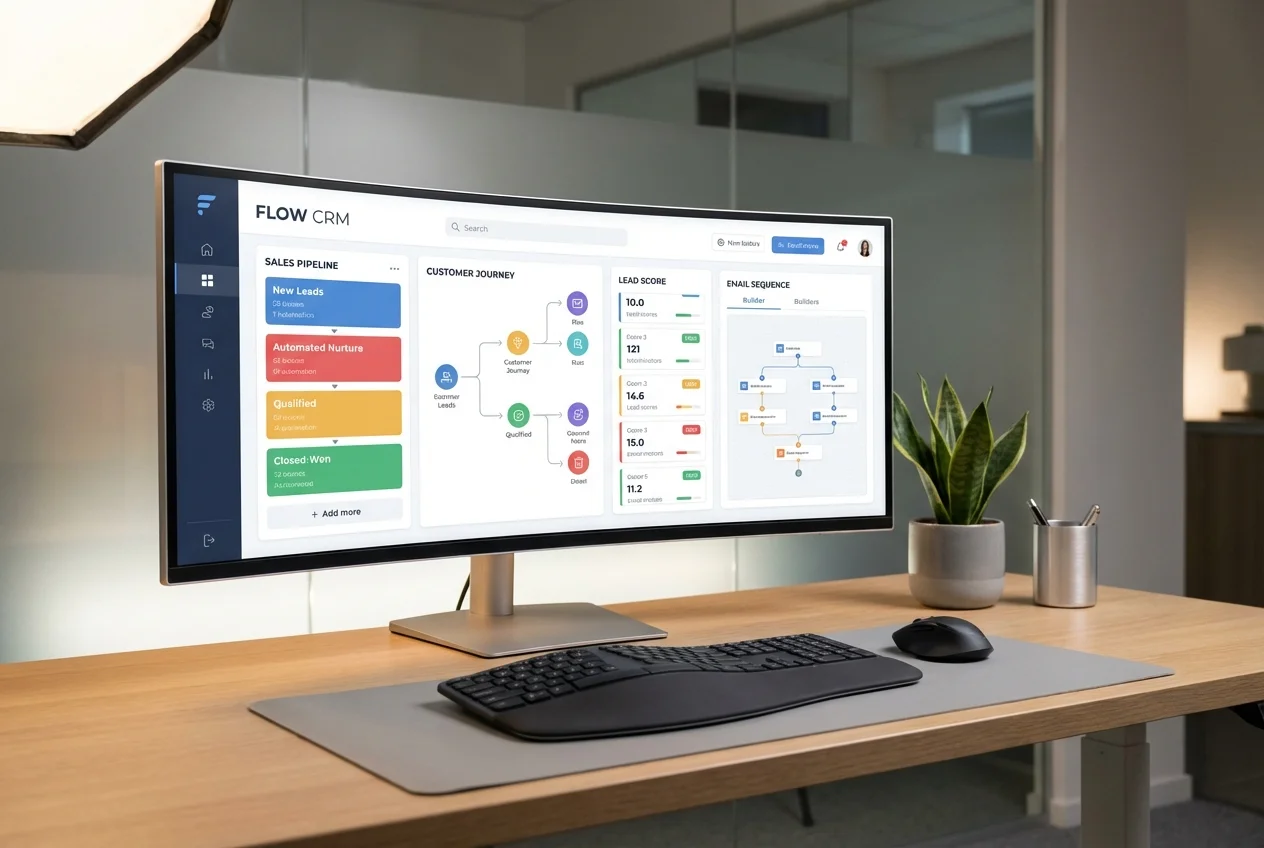 Sales & CRM Agents
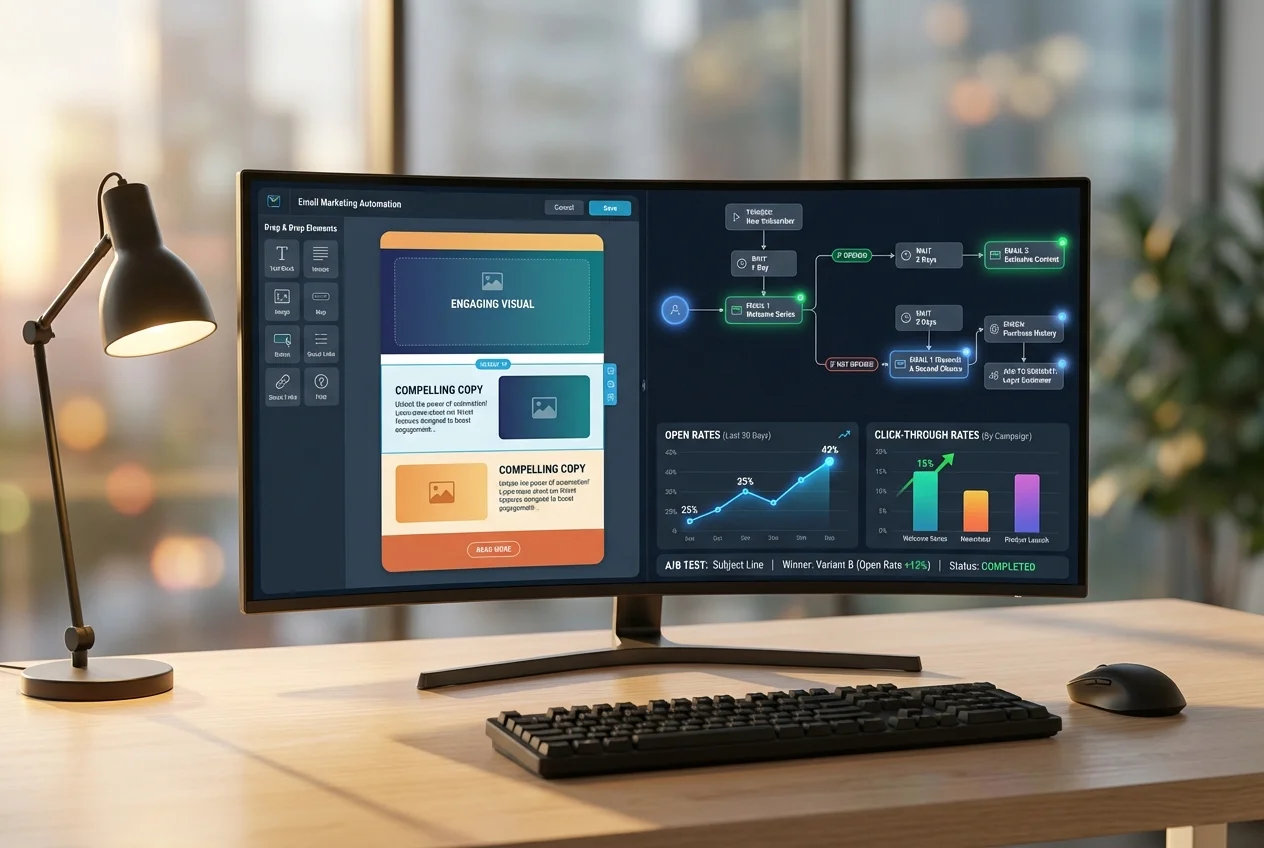 Lifecycle & Outreach Agents