AI Business Automation for UK Companies: A Practical 2026 Guide

What Is AI Business Automation?
AI business automation is the use of artificial intelligence — primarily large language models embedded as decision-making components inside operational workflows — to handle business tasks that previously required a human to read, interpret, and act. It is different from standard workflow automation (Zapier, Make, native CRM rules) in one critical way: AI business automation handles unstructured inputs.
Standard workflow tools execute rigid logic on structured, predictable data. If a form submission arrives with field A and field B filled, create a record in system C. That works for simple, predictable triggers. But most of what a UK business's people actually do is not predictable-field processing. It is reading an email and understanding what the customer really needs. Reviewing a contract and flagging the unusual clauses. Routing a support case based on tone, urgency, and account history — not just a category dropdown. AI business automation handles all of that, because the AI model can read and reason about any text-format input, not just structured fields.
The Four Buckets of AI Business Automation for UK Companies
UK businesses running effective AI automation programmes typically address four domains in order of payback speed.
Revenue Operations
Inbound lead handling is almost always the first process a serious AI business automation agency targets. Every inbound enquiry — web form, email, LinkedIn message, phone voicemail transcribed — is read by an AI model that extracts structured fields (company size, use case, urgency, budget signals), scores the lead against your ideal customer profile, routes it to the correct salesperson or team, drafts a personalised first reply for review, and logs structured data to your CRM. Sales teams running this recapture 8–15 hours per week across the team and see 15–25% higher inbound conversion. Explore our CRM automation service for the full architecture.
Back-Office Document Processing
Finance, operations, and HR teams spend a disproportionate share of their time on document handling: reading invoices, extracting PO numbers, coding expenses, reviewing contracts, onboarding supplier forms. AI business automation builds intelligent pipelines that ingest any document format — PDF, email attachment, scanned image — extract the correct structured fields with high accuracy, validate against your business rules, and either complete the transaction or escalate exceptions to a human reviewer. UK finance teams using AI-driven invoice processing typically cut time per invoice from 8 minutes to under 30 seconds. Read our guide to AI automation in finance and accounting for sector-specific detail.
Customer-Facing Operations
High-volume customer service — order status, account access, returns, billing questions, product enquiries — consumes 60–70% of most support teams' time on queries that follow predictable patterns. AI business automation builds triage systems that handle the structured majority instantly, escalate the complex minority with full context to a human agent, and log structured outcomes throughout. Well-deployed systems resolve 75–85% of inbound queries without human intervention, typically within seconds. See our AI chatbot service for deployment options.
Data, Reporting and Intelligence
Many UK businesses have data spread across CRM, accounting software, project management tools, and spreadsheets — none of it connected, all of it requiring manual extraction to produce any useful report. AI business automation builds multi-system data pipelines that pull, clean, join, and summarise operational data on a schedule, delivering structured dashboards and anomaly alerts that previously required two hours of manual work every Monday morning. For more complex use cases — predictive lead scoring, churn risk modelling, demand forecasting — the pipeline feeds machine learning models that run continuously against live operational data.
What AI Business Automation Is Not
Several things commonly sold as AI business automation do not deliver the value the label implies.
Automation with "AI" branding but no actual AI decision-making. Many tools and agencies label rule-based automation as AI. The test: if the system cannot handle a sentence it has never seen before without a rule change, it is not AI business automation. Ask specifically which large language model is embedded in the workflow and how it is validated.
Chatbots that just answer FAQs. A genuine AI business automation deployment takes action — creating tickets, booking appointments, updating CRM records, routing cases, drafting documents. A bot that only looks up static FAQ answers is not business automation in any meaningful sense.
Automation of processes with no measurable business value. Automating a process that takes one person 20 minutes per month is not a meaningful ROI opportunity. AI business automation should start with high-volume, high-frequency manual processes — ones where a human is doing the same thing dozens or hundreds of times per week.
How Much Does AI Business Automation Cost for a UK Company?
AI business automation engagements in the UK typically range from £8,000 to £60,000+ depending on scope and complexity. A structured breakdown:
- Single-process automation (e.g. inbound lead qualification): £8,000–£18,000 for discovery, architecture, build, deployment, and a three-month maintenance period.
- Multi-process programme (3–5 processes across two or three systems): £25,000–£55,000. The architecture work is amortised across processes, making the per-process cost lower.
- Enterprise automation programme with custom integrations: £60,000+, typically structured as a phased roadmap with monthly delivery milestones.
Payback periods for the first well-chosen automation typically run 3–6 months for SMEs, faster for higher-volume processes. The ROI calculation is straightforward: map the number of staff hours the process currently consumes, cost those hours at loaded rates (salary plus overhead), and compare to the automation investment. For most UK B2B businesses the maths is compelling at the first process.
Choosing an AI Business Automation Agency in the UK
The UK market for AI business automation agencies has grown rapidly since 2023, and quality varies enormously. The following questions separate a capable delivery partner from a rebranded marketing agency or a tool-configuration house.
Can they show production automations with real AI decision-making? Any credible AI business automation agency should be able to demonstrate a working system where an LLM reads unstructured input and makes a real decision — not just a Zapier workflow with "AI" in the trigger name. Ask specifically which model, how accuracy is validated, and what the fallback path looks like when the AI output is incorrect.
Are the engineers employed in-house? Many UK agencies broker work to offshore freelancers. Ask whether the team building your automation is directly employed by the agency and whether they will be available for maintenance after go-live.
Do they provide fixed-price proposals? Open-ended time-and-materials billing on the build phase is a red flag. A professional AI business automation agency scopes and prices each phase — discovery, architecture, build, deployment, stabilisation — before work begins.
How do they handle UK GDPR compliance? Your automation pipelines will process business data at scale. The agency should articulate clearly which AI providers are used and their data retention policies, where processing happens geographically, and what data processing agreement framework is in place.
For a detailed checklist, read our guide to choosing an AI automation agency in the UK. Or book a free consultation with our team — we will review your highest-value manual processes and give you an honest assessment of which AI business automations will deliver the fastest payback for your business.
 Agentic Workflow Automation
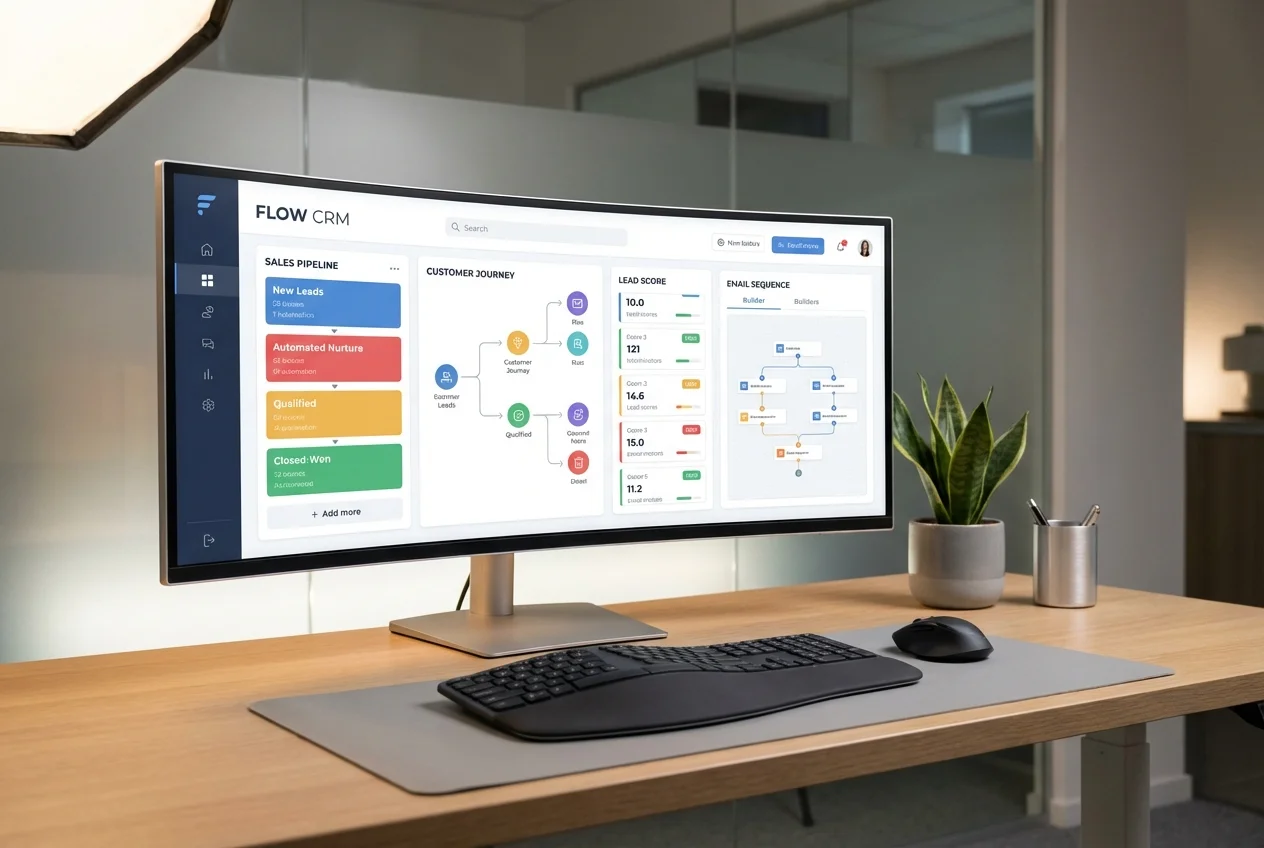 Sales & CRM Agents
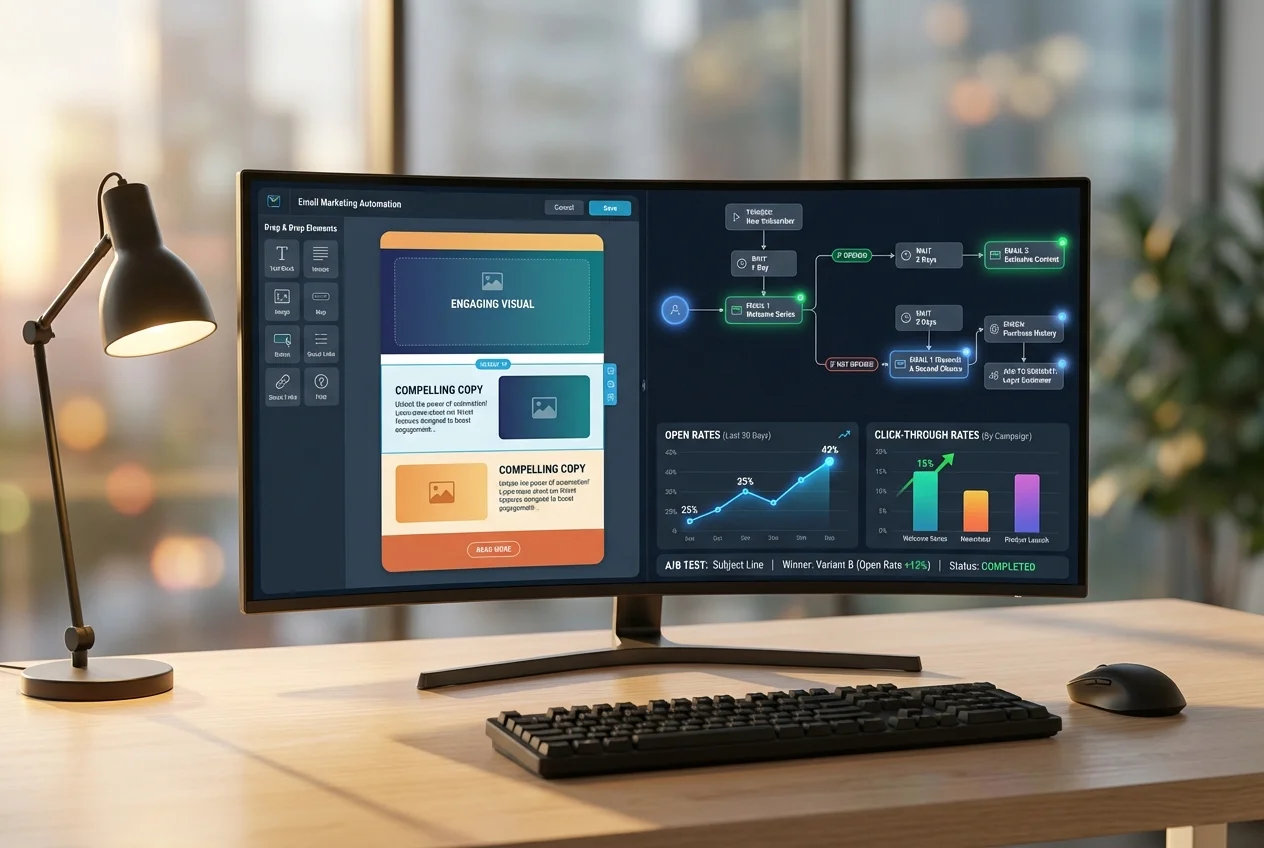 Lifecycle & Outreach Agents