AI Automation Services UK: What's Actually Included in an Agency Engagement

Why "AI Automation Services" Means Different Things to Different Agencies
"AI automation services" is one of the most-searched terms by UK operations leaders evaluating partners in 2026 — and one of the least standardised. Two agencies can publish identical service pages and deliver wildly different engagements: one writes prompts on top of Zapier, the other architects production AI systems with structured logging, evaluation harnesses, and ongoing model governance. Before you sign a statement of work, you need a clear picture of what is actually included in a serious AI automation services engagement, what should be priced separately, and what should never appear on the invoice at all. This guide walks through the practical scope of credible AI automation agency services in the UK — discovery, design, build, deployment, and ongoing support — so you can compare proposals on like-for-like terms.
The Five Phases of a Real AI Automation Services Engagement
Every credible UK provider follows roughly the same five-phase pattern. The names vary; the substance should not.
1. Discovery and Opportunity Audit
A structured review of the operational processes inside your business, scoring each candidate against four criteria: manual cost (hours per week), error rate, automation feasibility (how much of the work is AI-tractable), and strategic value. The deliverable is a prioritised opportunity list — usually 8 to 20 candidates ranked by 6-month ROI — plus a recommendation on which one or two to scope first. Good agencies run this as a fixed-price engagement (£2,000 to £5,000 in the UK); cowboys will offer it free and try to skip directly to selling a build. Our process consulting service is structured exactly this way.
2. Architecture and Solution Design
Before any code is written, the agency should produce a written architecture document covering: which large language model and provider will be used and why, how the system handles unstructured inputs, where the decision boundaries are between deterministic logic and AI, what the integration surface looks like with your existing systems, how errors and edge cases are detected and escalated, and how the system will be monitored. This document is the single most important deliverable in the entire engagement — it is what protects you from a build that runs out of budget halfway through because the architecture was never thought through. Read our guide on choosing an AI automation agency for what to look for in this phase.
3. Build, Integration, and Testing
This is where the actual engineering happens. A typical AI automation services build covers: prompt engineering with structured outputs and validation, integrations with your existing platforms (CRM, ERP, ticketing, email, telephony, calendars), a structured logging and observability layer, an evaluation harness that tests the AI's outputs against representative inputs, and a deployment pipeline that lets the system be updated safely after go-live. Look for agencies that test against adversarial inputs and edge cases — not just the happy path. Our AI workflow automation service follows this pattern end to end.
4. Deployment and Heightened Monitoring
The first two to four weeks after go-live are the highest-risk period for any AI automation. A serious agency runs a deployment-and-stabilisation window with daily check-ins, accelerated bug fixing, and tighter monitoring thresholds. Cowboys ship the system and disappear. The deployment phase should include: documented runbooks for operators, dashboards for the metrics that matter (volume, accuracy, exceptions, cost), and a clear escalation path for incidents. If the agency cannot describe their deployment process specifically, they have not done this enough times.
5. Ongoing Support, Evolution, and Model Governance
AI automation is not "build and forget" — LLM APIs update, your business processes evolve, edge cases emerge in the data, and the system has to evolve with them. Credible AI automation services include a maintenance retainer with defined response times, scheduled evaluation runs, and roadmap planning for new use cases. Pricing typically lands at 15 to 20% of build cost per year. Without this layer, even a great build will quietly degrade over 6 to 12 months.
What Specific AI Automation Agency Services Should Be Available
A full-scope UK AI automation agency should be able to deliver across all of the following service lines. You may not need every one — but the agency should be able to discuss each one credibly, and recommend the right combination for your business.
- AI workflow automation: intelligent, multi-step workflows with LLM decision nodes (our service).
- CRM automation: intelligent lead handling, qualification, routing, and follow-up (our service).
- AI chatbots and agents: retrieval-augmented LLM agents for support, sales, and internal use (our service).
- Email marketing automation: AI-personalised email at scale with deliverability management (our service).
- Data pipeline automation: continuous data integration with anomaly detection (our service).
- Process consulting and AI roadmaps: opportunity audits and prioritised programme plans (our service).
What AI Automation Services Cost in the UK in 2026
UK pricing for AI automation services in 2026 falls into recognisable bands. A discovery and opportunity audit typically lands between £2,000 and £5,000. A focused single-process build runs £5,000 to £15,000 depending on integration complexity. A coordinated multi-process programme covering three to six related workflows usually falls between £15,000 and £45,000. Enterprise transformation across multiple functions sits above £50,000 and can run into six figures for a 6 to 12 month programme. Ongoing running costs — LLM usage, observability, infrastructure — typically run at 10 to 20% of build cost per year. For a deeper breakdown of how to model the business case, see our measuring AI automation ROI guide.
What Should NOT Be in an AI Automation Services Proposal
Some line items appear regularly in cowboy proposals and should be challenged or removed:
- Vague "AI strategy workshops" charged as deliverables: a strategy workshop should produce a written roadmap, not just a meeting summary.
- Per-seat licensing fees for tools the agency owns: if the agency is reselling their own platform, the cost should be transparent and you should own the data and configuration.
- Open-ended T&M ("time and materials") on the build phase: the build phase should be fixed-price against the architecture document. T&M is appropriate for ongoing support, not for greenfield engineering.
- "AI training" as a separately billed line item with no measurable output: fine-tuning or evaluation work should produce a documented, measurable improvement.
How to Compare AI Automation Services Proposals Like for Like
Most UK businesses receive 2 to 4 proposals from different agencies, and they almost never compare apples to apples. To force a fair comparison, ask each agency to break their proposal into the same five phases above, with separate prices for discovery, architecture, build, deployment, and 12 months of support. Then ask each agency to answer the same five technical questions: which LLM, which integrations, what observability, what evaluation framework, what handover. Within 15 minutes you will be able to tell which agencies have actually delivered AI systems and which are improvising. Our definitive AI automation agency guide includes a downloadable comparison template.
Why AI Automation Services Are Different From Traditional Software Services
Traditional software services produce a system that does the same thing every time. AI automation services produce a system that produces slightly different outputs depending on the input — and that requires a different model of quality, testing, and ongoing care. The provider must run evaluation tests continuously, monitor for drift, and have a plan for what happens when a new model version is released by the LLM provider. If your prospective agency talks about AI automation as if it were a normal software project, they have not run an AI system in production for long enough to know the difference. For the foundational background, read our plain English guide to AI automation.
Getting Started With AI Automation Services
If you are evaluating AI automation services for your UK business, the highest-leverage first step is a structured opportunity audit — not a sales call. A proper audit identifies the two or three processes where AI automation will pay back within six months, scopes them clearly, and produces a fixed-price proposal for the first build phase. We run this as a free engagement: a structured conversation about your operations, a written opportunity list ranked by ROI, and a costed roadmap for the next 6 months. Book a free consultation and we will walk through your processes, identify where AI automation services will create the most measurable value, and show you exactly what a credible AI automation agency engagement looks like in practice.
 Agentic Workflow Automation
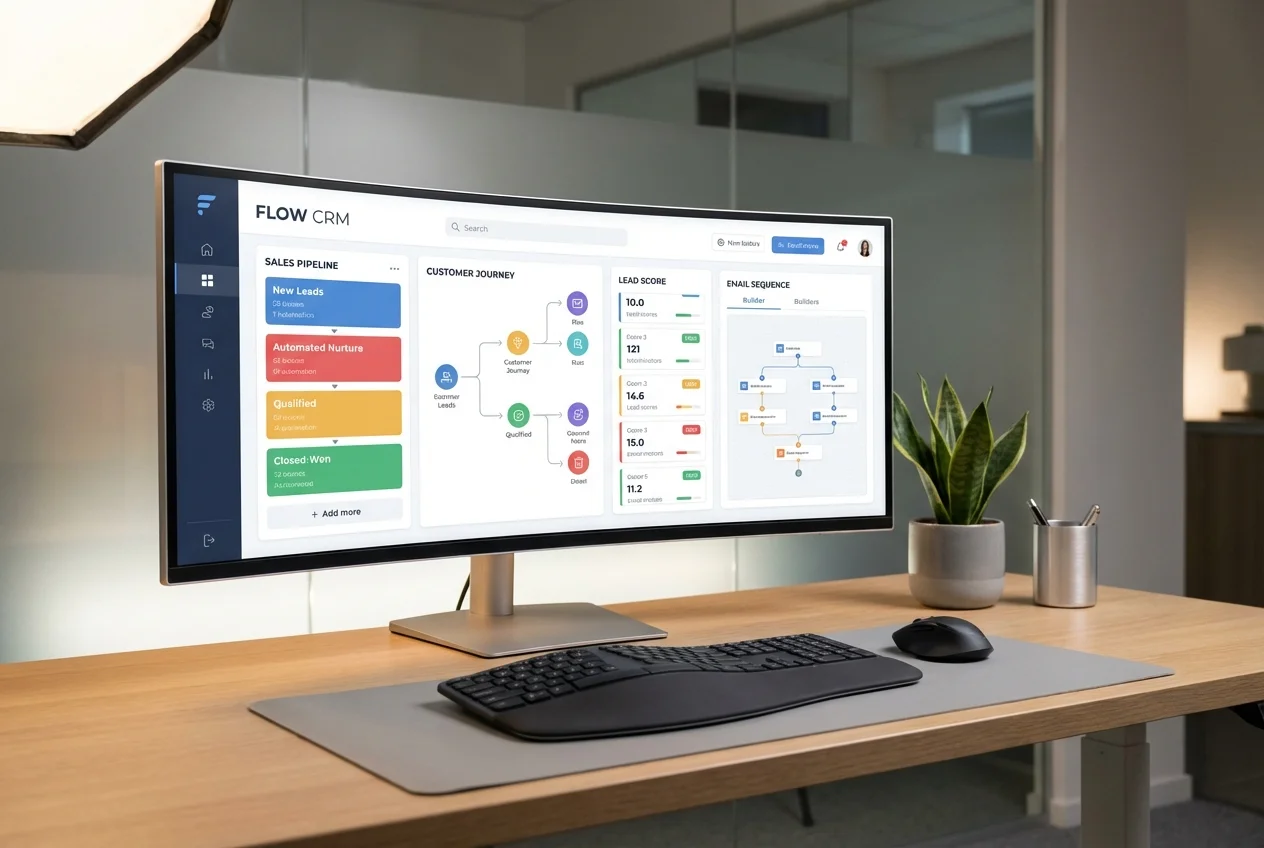 Sales & CRM Agents
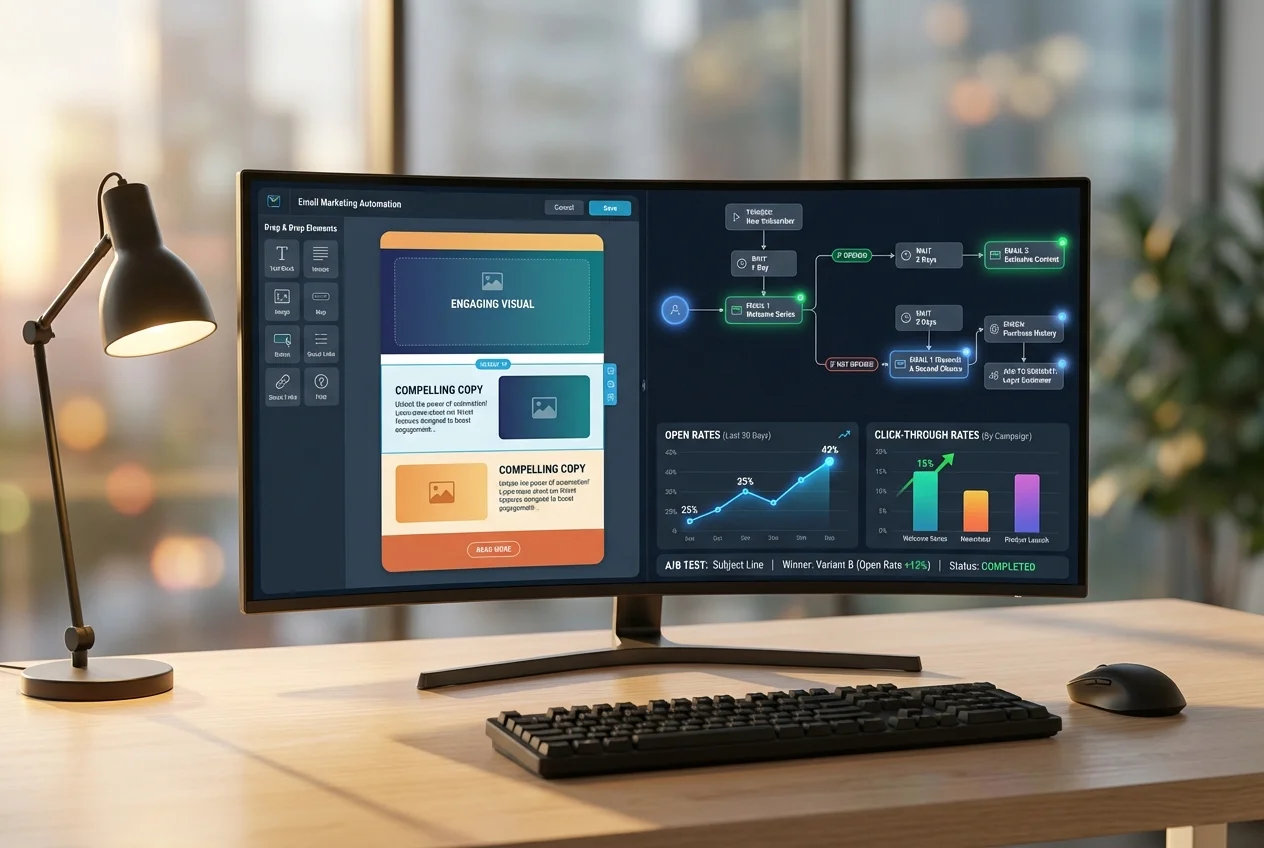 Lifecycle & Outreach Agents