How We Automated a Law Firm's Client Onboarding in 4 Weeks
The Brief
When Thornton & Associates first approached us, they were sceptical. They'd heard the automation pitch before — from software vendors, from their IT consultants, from conference speakers — and they'd always concluded the same thing: that their work was too bespoke, too regulated, and too relationship-driven to automate in any meaningful way.
The managing partner's exact words: "We're a law firm. Everything we do is different every time."
We agreed that most of what a solicitor does is genuinely different every time. The legal analysis, the strategic advice, the client relationship — none of that is automatable. But we asked a different question: what happens before any of that starts? What does the onboarding process actually look like?
The Before State
Thornton's client onboarding process, mapped in detail, looked like this:
- New client enquiry received (by email or phone)
- Fee earner manually creates a contact record in the practice management system
- Fee earner drafts and sends a conflict check email to the firm's administrator
- Conflict check completed manually — typically takes one to two days
- Fee earner drafts an engagement letter using a Word template, customising manually
- Letter sent by email for e-signature
- Fee earner manually creates the matter in the billing system
- Fee earner sends a welcome email and a client questionnaire
- Kickoff call booked via back-and-forth email
Total time per new client: approximately 3.5 hours of fee-earner time. With five fee earners bringing in an average of three new clients each per month, that was 52 hours of billable time per month spent on administration before a single piece of legal work began.
At the firm's average billing rate of £200 per hour, that represented £10,400 per month in unbilled capacity.
The Automation We Built
The first thing we established was which parts of the process were genuinely variable (requiring human input) and which were structural (always happening in the same sequence regardless of the matter type). The answer was clear: the legal work was variable; the onboarding infrastructure was almost entirely consistent.
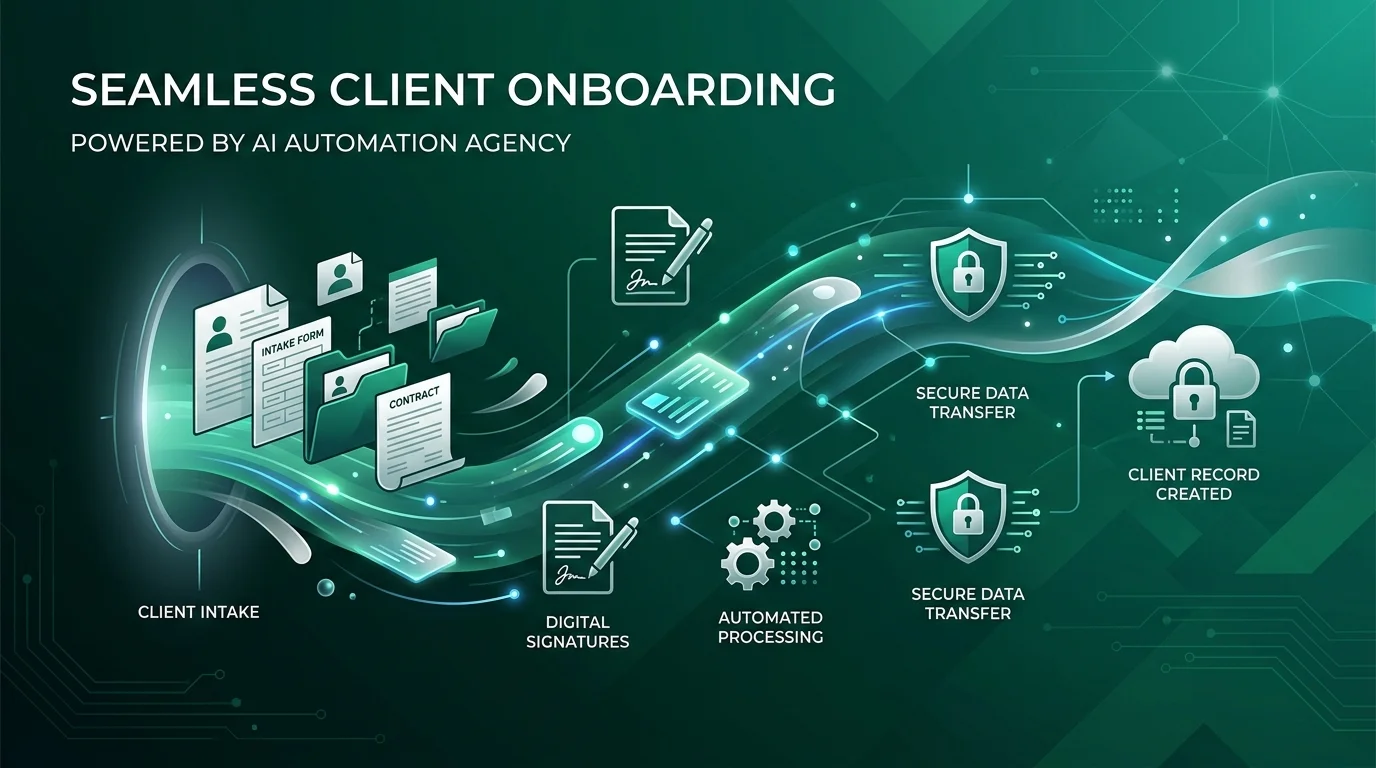
Over four weeks, we built an automated onboarding flow that:
- Created the contact and matter record in the practice management system automatically when a new enquiry was logged
- Ran an automated conflict check against existing client records
- Generated a customised engagement letter by pulling matter-specific details from the system into a pre-approved template
- Sent the letter via DocuSign for e-signature and tracked completion
- Created the matter in the billing system automatically when the engagement letter was signed
- Sent a branded welcome email and a client questionnaire at the right moment in the sequence
- Opened a Calendly booking link for the kickoff call in the welcome email
Fee earner involvement in the process reduced to two steps: approving the conflict check result and reviewing the generated engagement letter before it went out. Total time: under 20 minutes per new client.
The Results
In the first quarter after go-live:
- Onboarding time dropped from 3.5 hours to under 20 minutes per client
- E-signature completion rate improved from 72% to 94% (faster sending, better tracking)
- Fee earners recovered an average of 6 billable hours per week across the firm
- Client satisfaction scores on the onboarding experience increased by 31%
- Zero matters were opened without a signed engagement letter (previously a compliance risk)
The automation paid for itself in under six weeks.
What Changed the Managing Partner's Mind
At the end of the project, we asked James Thornton what had changed his mind. His answer was instructive: "We kept saying everything we do is different. But when you mapped the actual process, what was different was the legal content — and you didn't touch that. What you automated was the container around it. The process of creating matters and sending paperwork is the same whether we're handling a commercial lease or an employment dispute."
That distinction — between the variable content of professional work and the consistent structural process around it — is the key to automation in professional services. The automation doesn't do the expertise. It handles everything else so the expertise has more time to do its job.
 Agentic Workflow Automation
 Sales & CRM Agents
 Lifecycle & Outreach Agents